Sitting on a tired bus from Copacobana to La Paz was not the afternoon I had in mind after leaving Isla del Sol, but that is often the way it goes with travel.
I did get an unexpected break from the bus when the bus jockey let everyone off with no explanation. The locals aboard disappeared into the crowds of pedestrians by the lakeside market. The tourists stood around looking bewildered. I trailed the jockey around the market, asking what was going on. He then told me the passengers had to be ferried across the lake separately from the bus.
We then got to watch them drive the bus onto a basic barge raft with a motor at the end and putt-putt it across the channel.
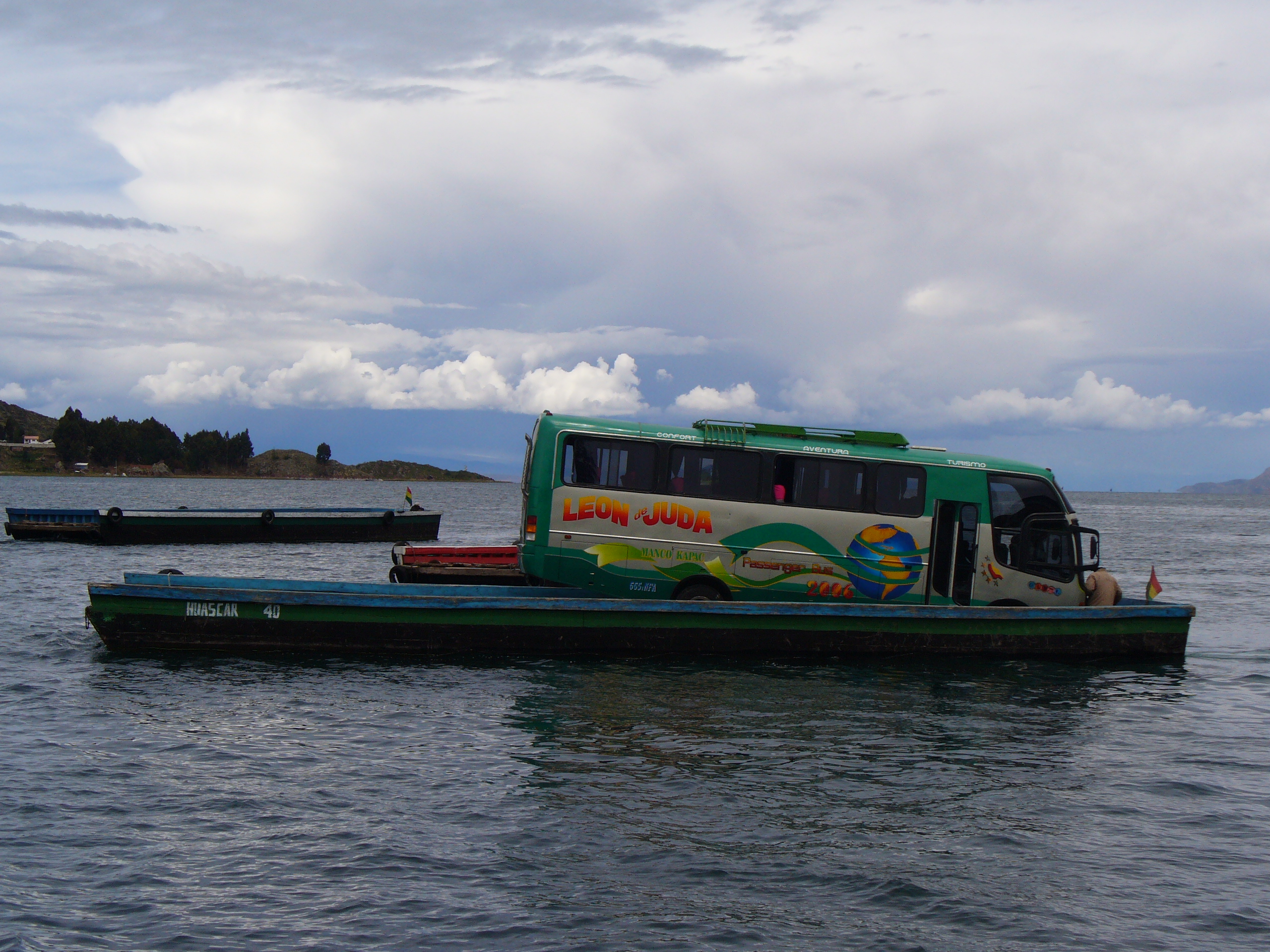
The Bus Raft
The outskirts of La Paz, the capital city, were shacks with tin roofs as far as the eye could see. Ominously there were stuffed effigies hanging on nooses from telephone posts, which had been hung during the recent elections. Bolivia can have serious political protests, and at that time, the Indigenous President was trying to push through a new constitution to restore some balance between the economic classes in Bolivia.
And then we turned a corner and this was the view:

La Paz
This photo barely does justice to the jaw-dropping vista of the city. La Paz’s center is nestled into a ring of snow-capped mountains. This means two things: 1) whichever way you walk, you are going uphill and 2) wherever you walk, there are gorgeous mountains in your view.

Uphill both ways…
The trouble with everything being up is that it is easy to get lost, since it is hard to work out which direction you came from.
I toured the witches market and the coca museum. The witches market sells all kinds of unusual things, potions, magic amulets and other oddities like dried llama fetuses which are buried under new homes to bring good luck.

Congrats on the new house!
The coca museum was tiny but very interesting. For a $1 admission, you can learn the entire history of the coca plant in a very balanced narrative that addresses both the profound cultural significance of the plant to Andean culturem as well as the dangers of its derivative drug cocaine. Trivia fact: did you know that Pre-Columbian civilizations in South America were able to sail across the Pacific to Tahiti in reed boats?
La Paz was one of the few places where I felt unsafe. There were winding alleys with bad lighting, mangy stray dogs, spiked gates and barred windows. One thing I had really wanted to avoid in Bolivia was taking an overnight bus. I had heard many bad stories of accidents. I was afraid of night buses in Bolivia but I was more afraid of staying in the city at that time right after the elections, and booked myself the first bus south to Uyuni that night.
While the bus did get me there safely, it was the worst bus ride I have ever been on. The windows were sealed shut, though not enough to keep the rain from drizzling down the wall next to me, soaking my right side and leaving my feet in a puddle. The air conditioning was frigid. The road had the bus tilting at angles that made me sure the bus would roll over.
 Same Skies Above
it looks beautiful though
Can’t argue with that – the scenery was beautiful everywhere in Bolivia. La Paz was no exception.